the Upholsterer Next Door
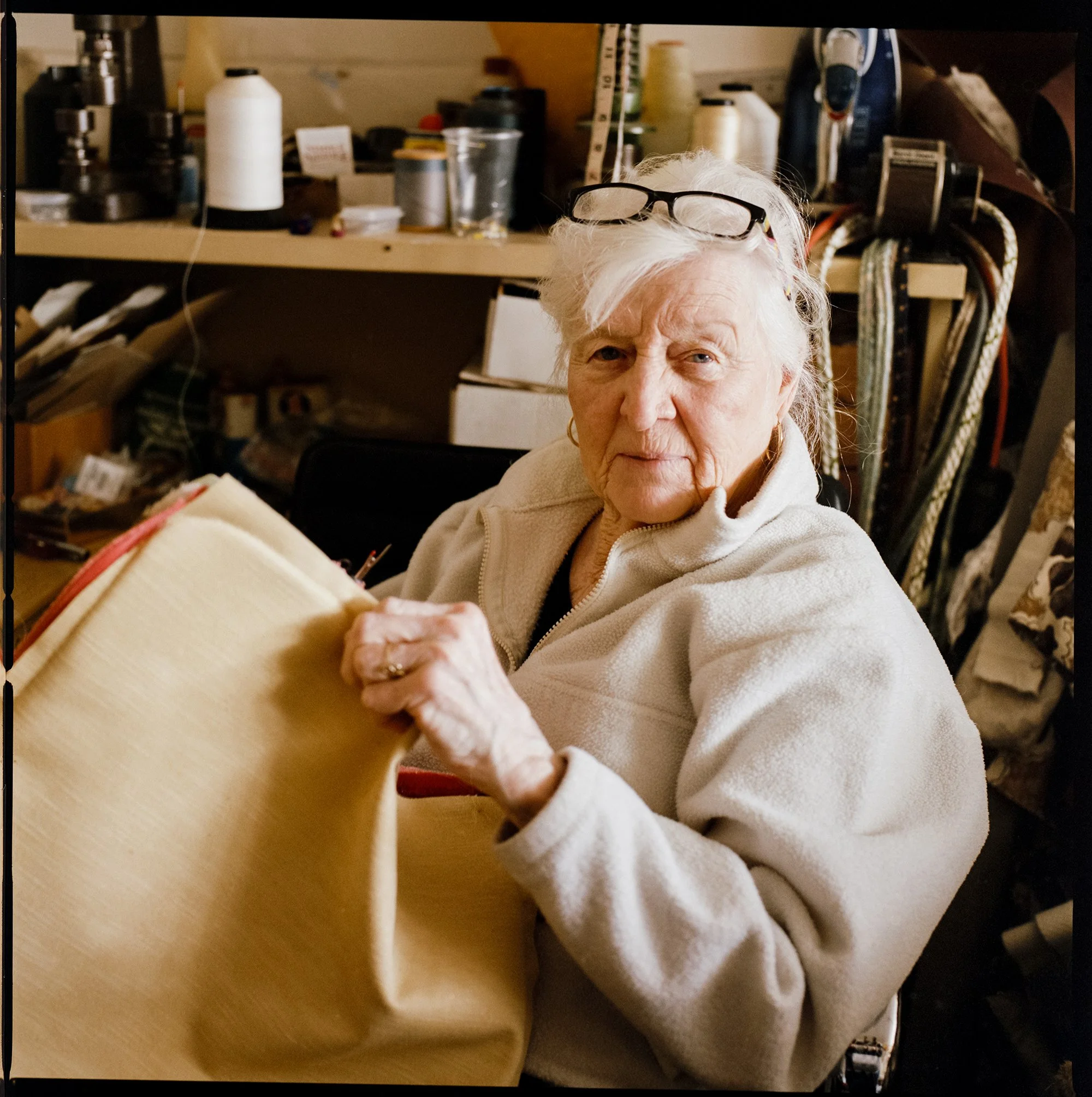
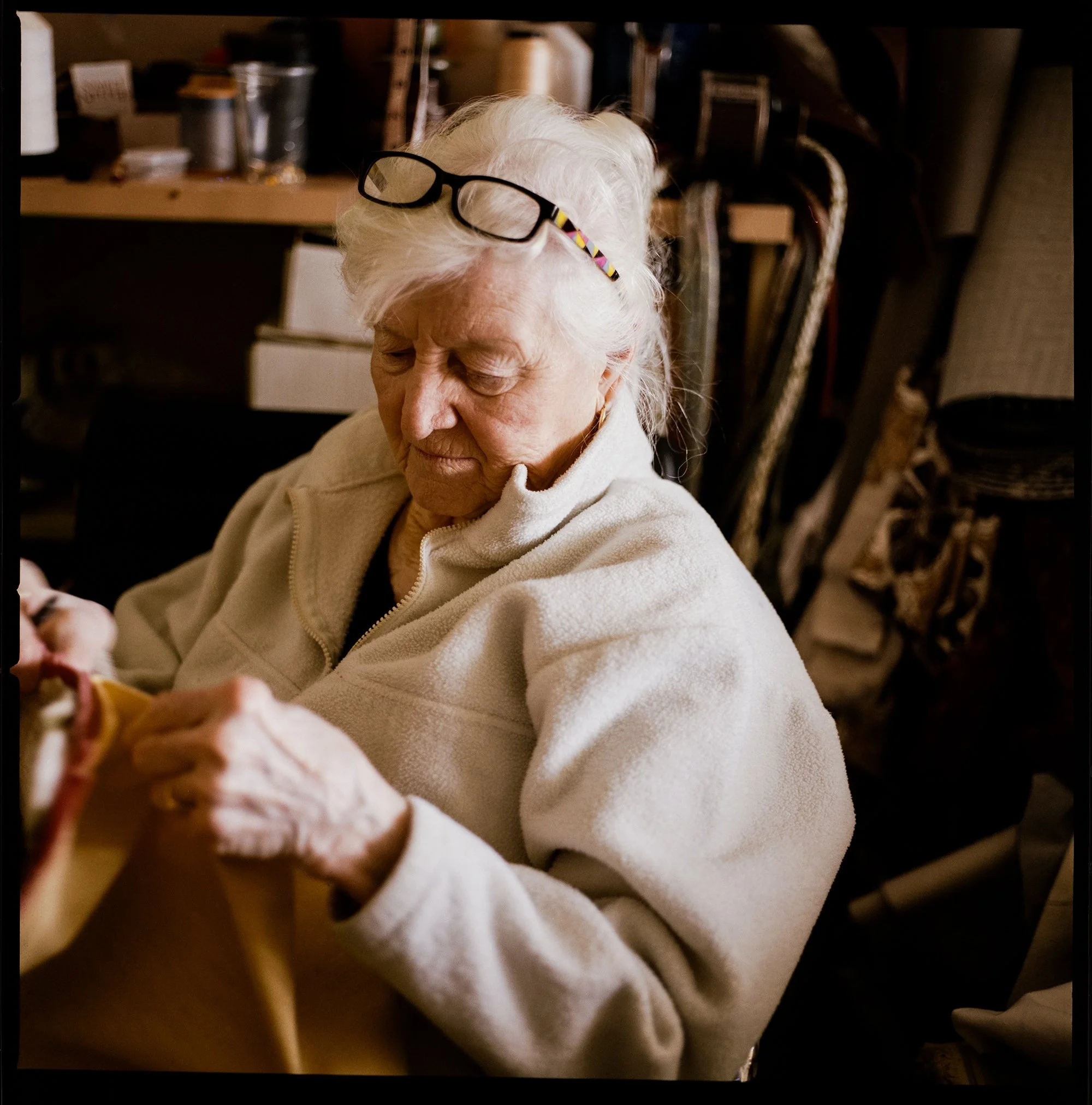
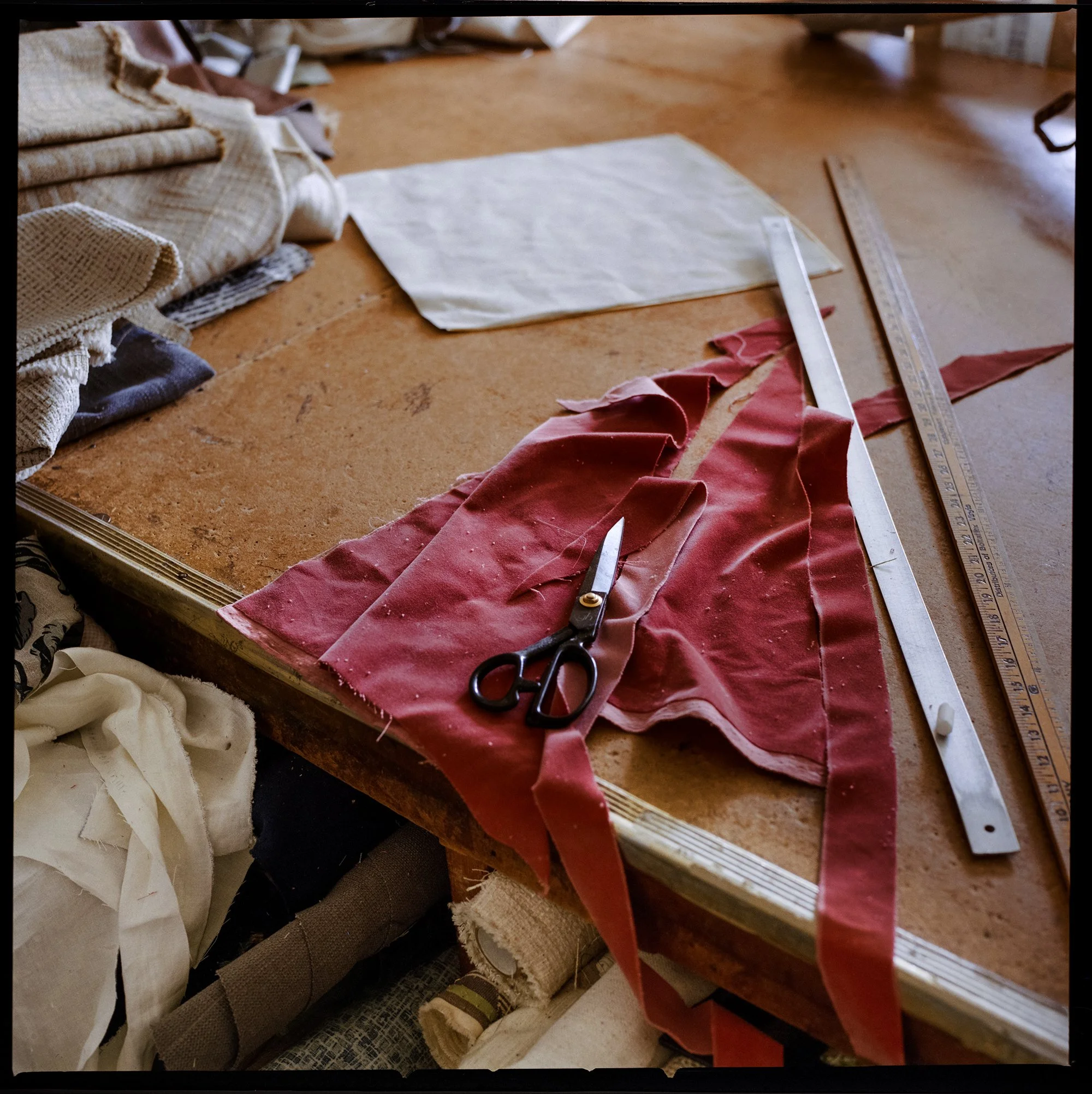
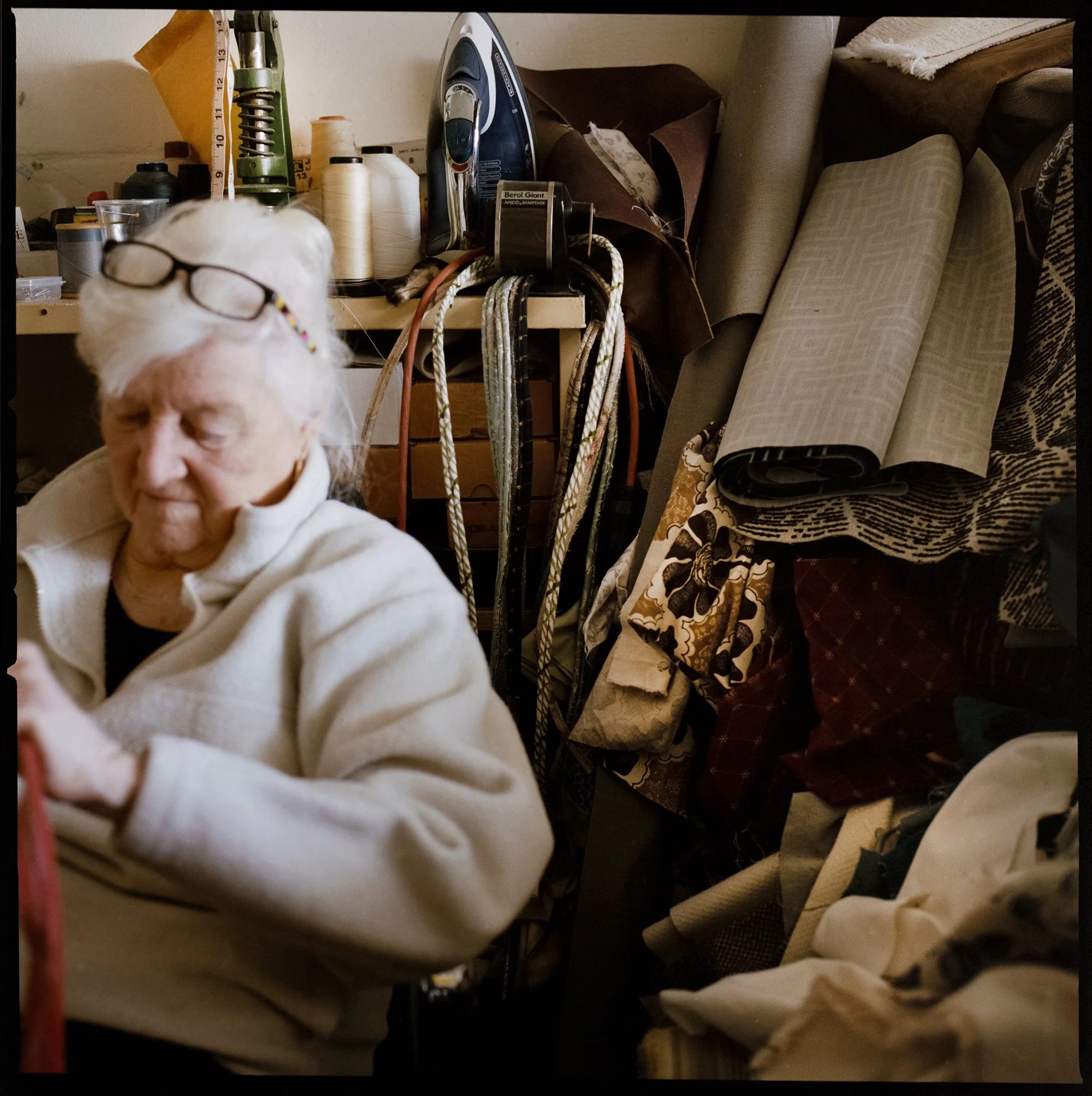
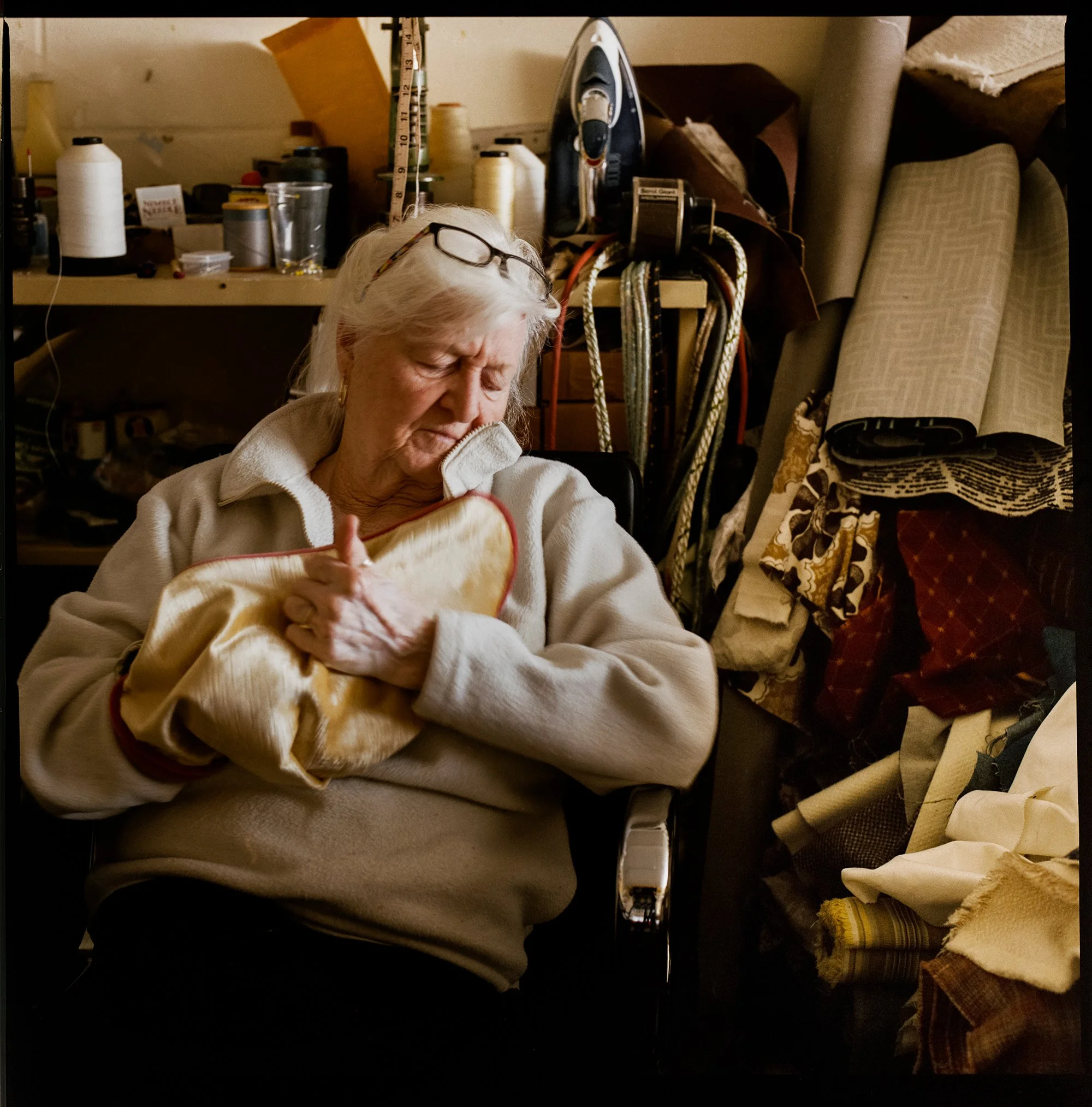
When I moved into my studio on Tanner Street two years ago, Peggy was the first neighbor I met. Our building, and row of shops is quirky and charming- pieces of which were built in part (or so I’ve been told) by the Haddonfield High School shop class decades ago, with all of the water damage and wiggly walls to prove it. It took me no time at all to realize that I should take advantage of having an upholsterer next door. The first thing I brought her was a pile of red pinstriped fabric. I wanted a cushion to top the entry bench I had freshly trash picked on my way to renew my expired passport a couple of towns over. She was quick, precise, and I was smitten with the whole process.
Over the years I’ve found that my lifelong love of secondhand and vintage pairs nicely with a love and appreciation of mending, and repurposing. I’ve done some very basic, entry level sewing that you might bring to a professional myself over the years, to various success ranging from acceptable to absolutely awful. My pile of half finished projects is the perfect barometer for my personal skill level with the craft, which depending on the day- hovers anywhere between rudimentary and intermediate. I was taught the basics by an amish family friend when I was a kid, and have been saying at least twice a year since my early 20’s that I should really sign up for a sewing class finally. After that first bench cushion I brought to Peggy, I started paying closer attention to the skill and problem solving that upholstering takes. Writing this was an exercise in attempting to count how many object and fabric pairings I have brought her way since I moved in. Her impending retirement is just around the corner, a fact that I continue to be in denial over, as I love to pop by for a chat regardless of whatever fabric related idea I’m bringing her way. I’m trying to get as many lingering upholstery projects out of my system as I can while I have her next door.
Not long after the bench cushion that started it all, I brought her a midcentury canvas wrapped wood safari chair I found a few years back on facebook marketplace. The original fabric had ripped due to excessive toddler climbing and I quickly hand stitched it back together, knowing it was in no way an ultimate solve if I wanted it to last. She took the chair apart completely, and meticulously re-wrapped it with a 1:1 match of the original duck canvas fabric.
After the chair, I asked her if she could make two covers for the back of our Rove Concepts bed frame. The headboard is essentially a giant pillow that attaches to the frame, and I didn’t realize the cover was fully removable until we were moving to our apartment last year before we started our renovation. I was really not feeling the grey anymore, and knew that when we moved back into our house after the reno was complete, I was going to want something warmer and less masculine feeling. I found a vintage floral brocade fabric, and a linen yellow plaid so I could switch between different patterns when the mood strikes.
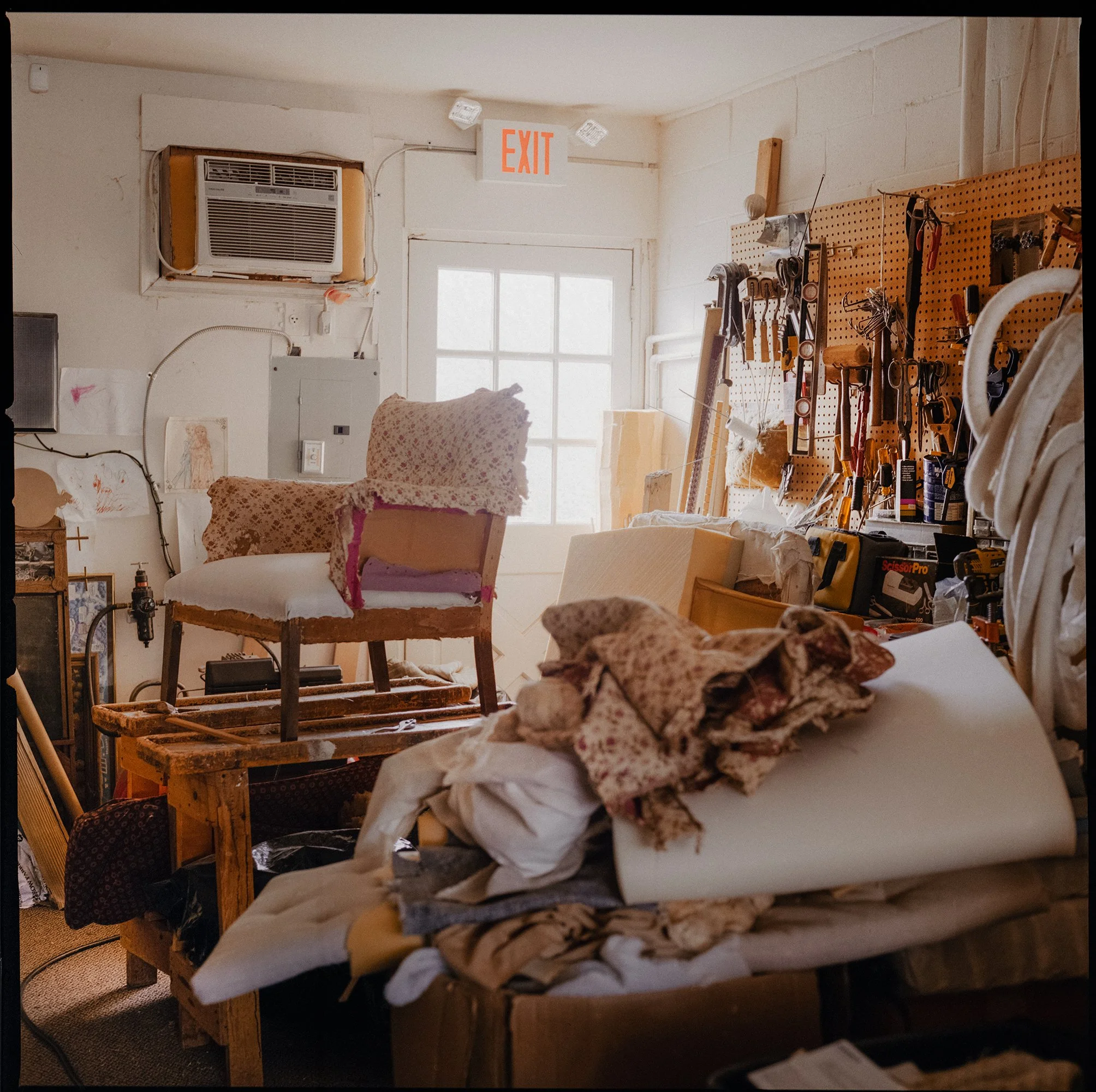
Recently when I found a pink plaid accent chair during another thrifting excursion, I loved the shape of it and toyed with the idea of stripping the paint off the legs. I plopped it in her studio and asked her if we could measure and take some of the fabric off to see what was underneath. As she carefully cut away the top layer, beneath we found a beautiful floral fabric that is essentially what I was looking to replace the much cheaper looking plaid with. Someone had hand upholstered right over top, preserving the original detail, save a few splotches of white paint from covering the wood of the legs. I could send them straight to jail for that.
When I paused to question my sudden proclivity for fabric based home projects, I realized it was scratching the vintage hunting itch in a different way. It added an exciting layer to how I’ve always valued extending and enhancing the life of old, lived-in pieces, and having a professional just a stone’s throw away to help me visualize and execute was the cherry on top.
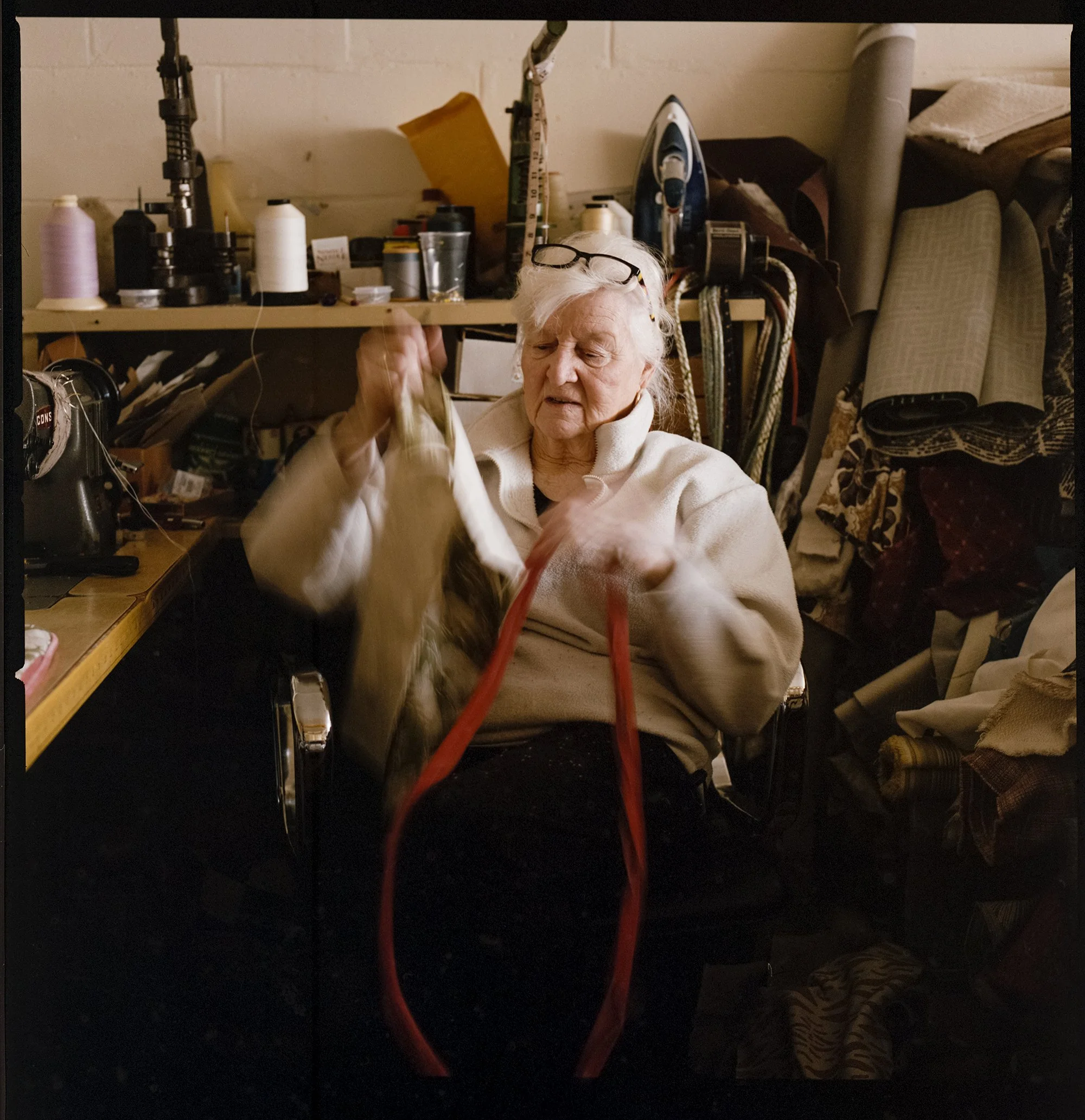
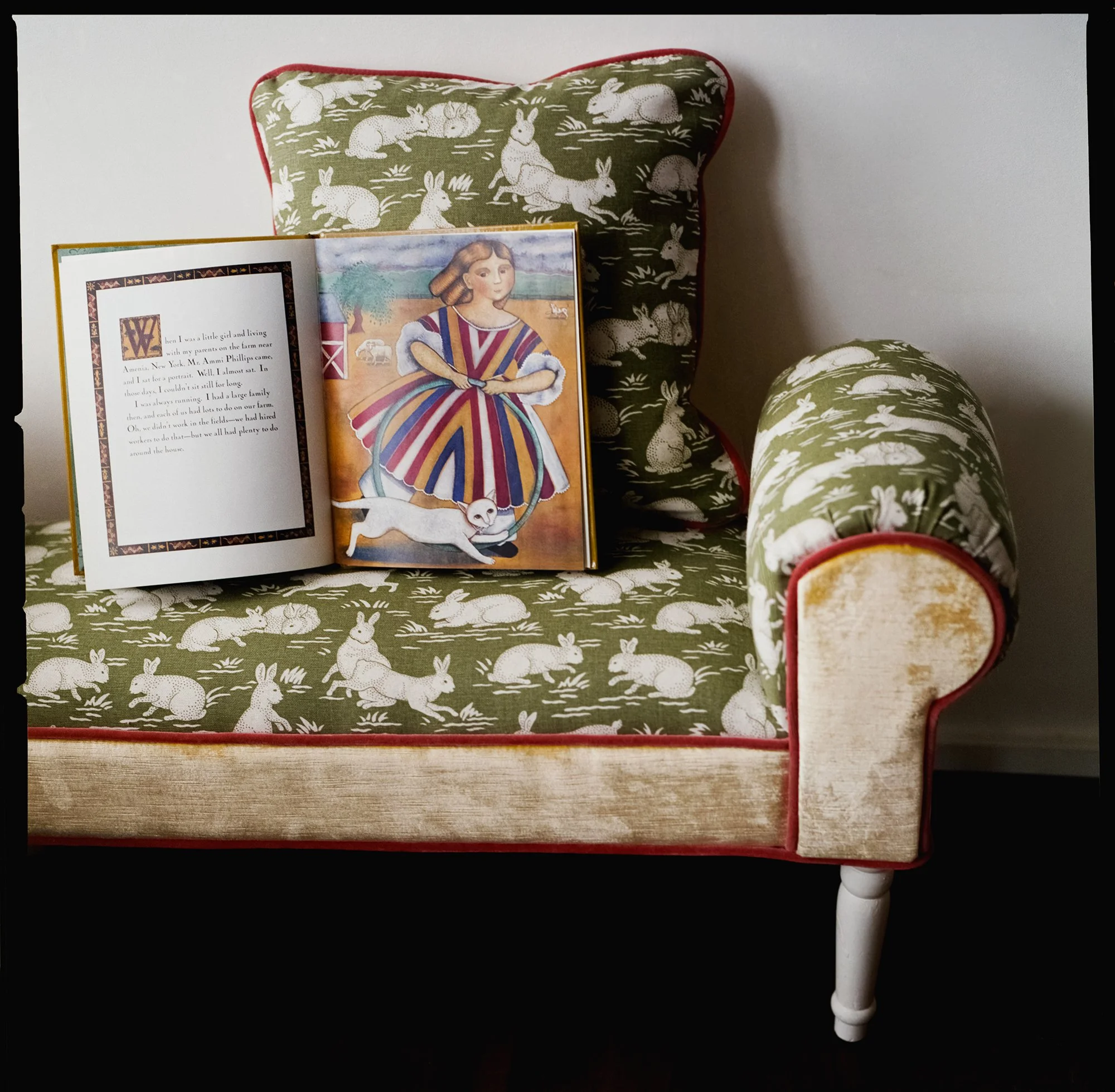
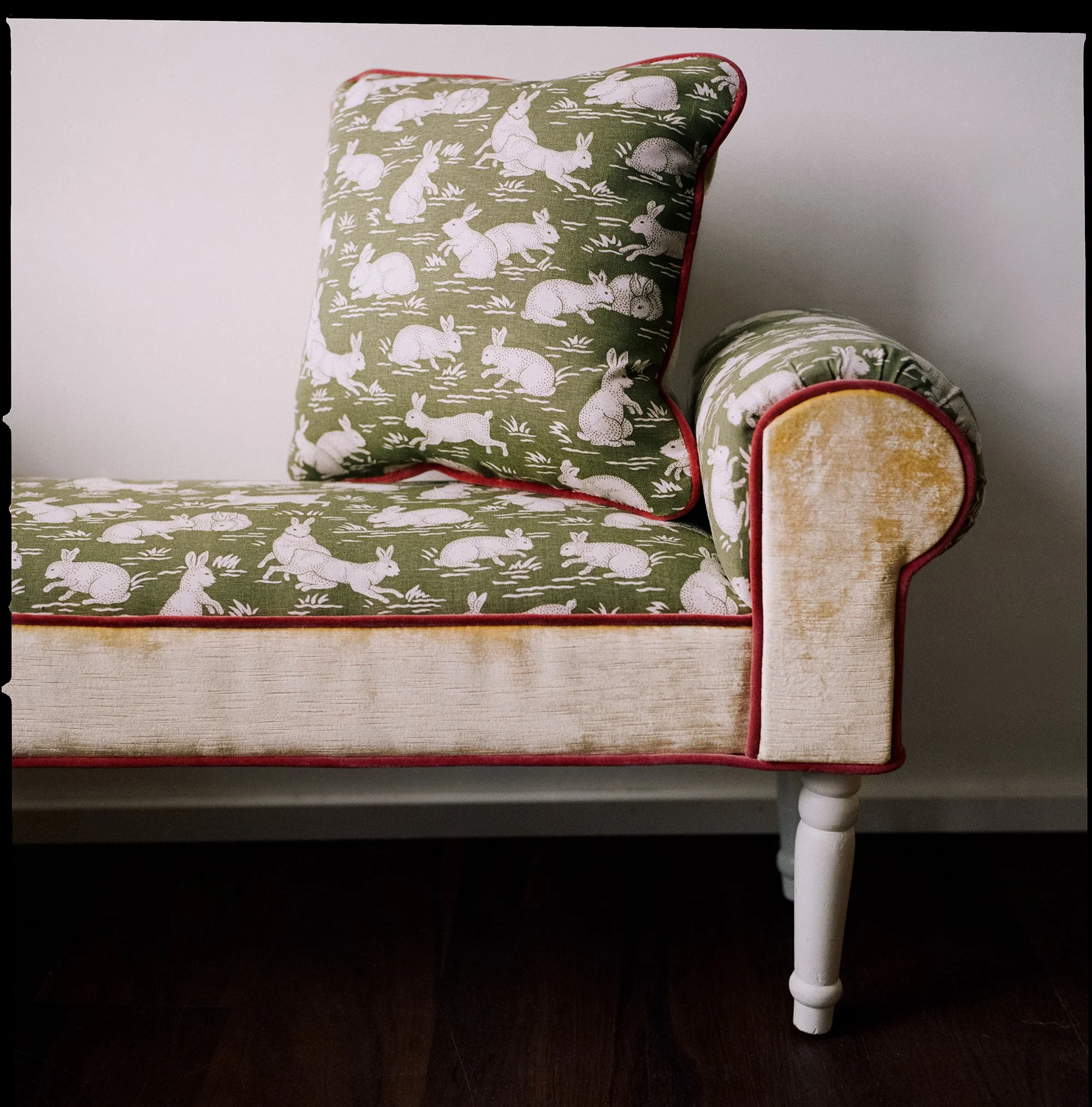
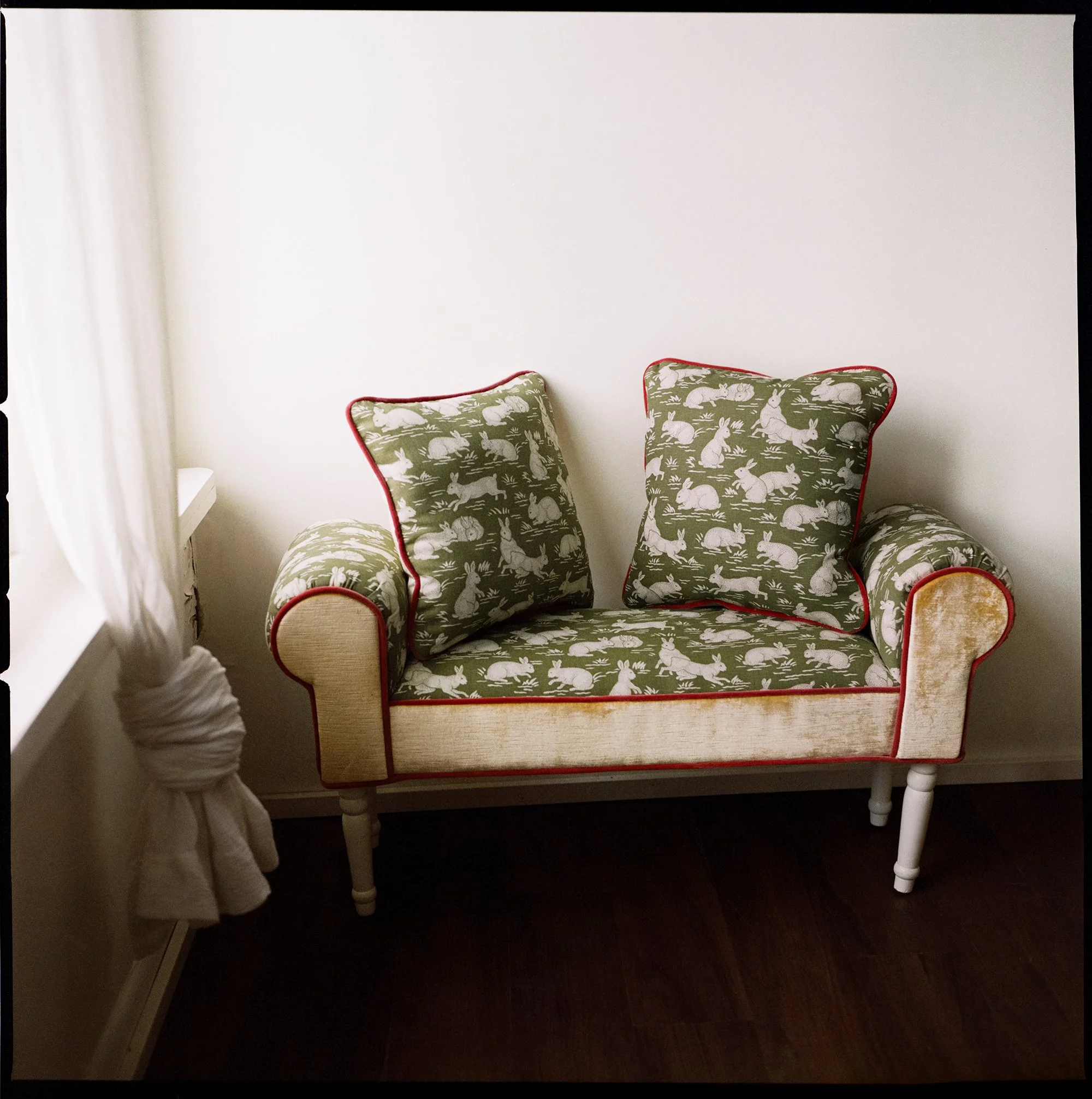
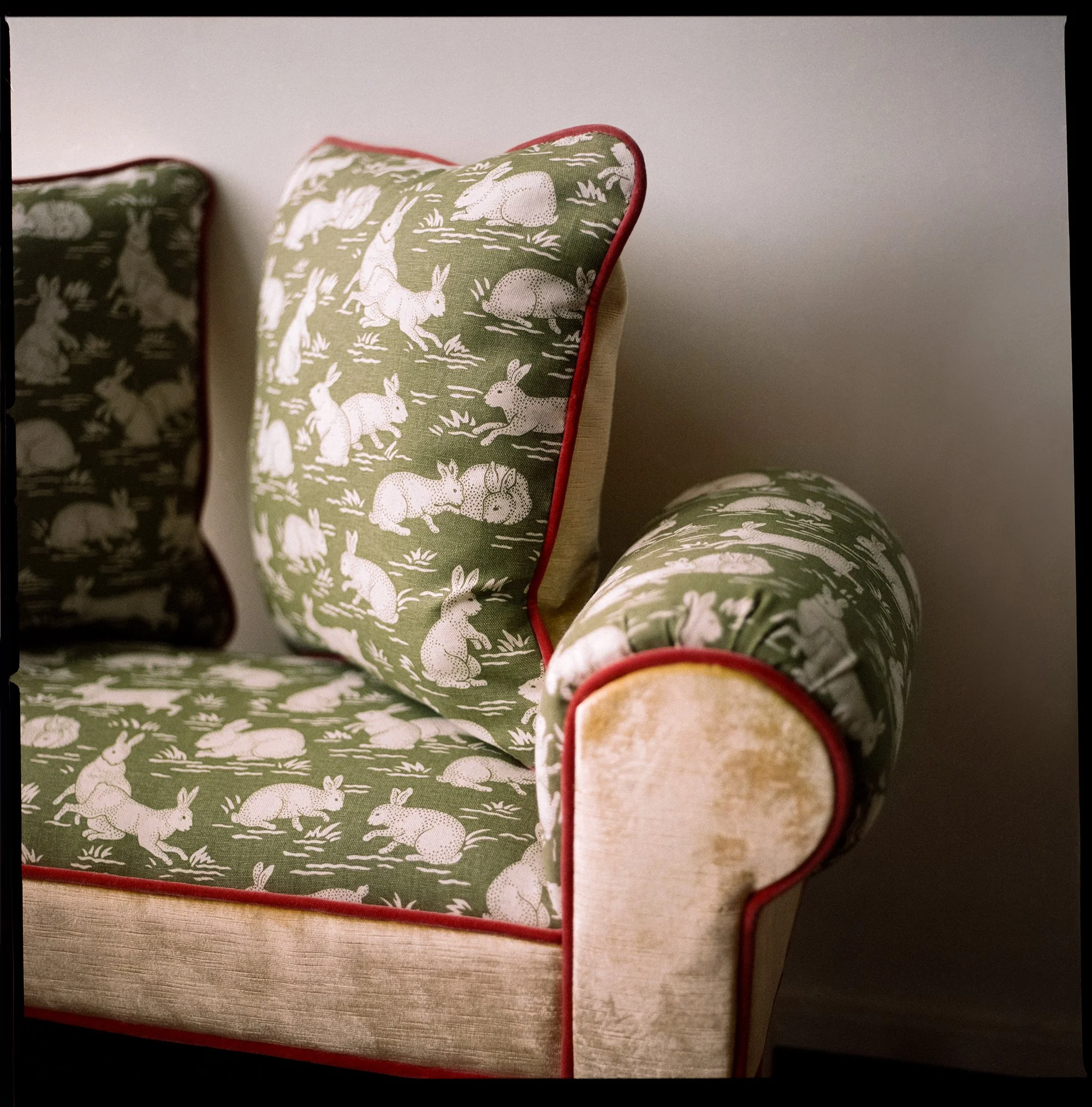
The magnum opus of our collaborative upholstering time together really does feel like this bunny bench, a $15 Goodwill find that is now completely transformed. While I wasn’t mad at the original fabric, a mix of red stripes and patterns that was most certainly a relic of someone’s 1994 era childhood bedroom, I knew if I handed it over to Peggy she could really make it sing. I’ve said this often- the beauty of secondhand is finding pieces like this that I wouldn’t seek out, but have an appreciation for once I stumble upon them.
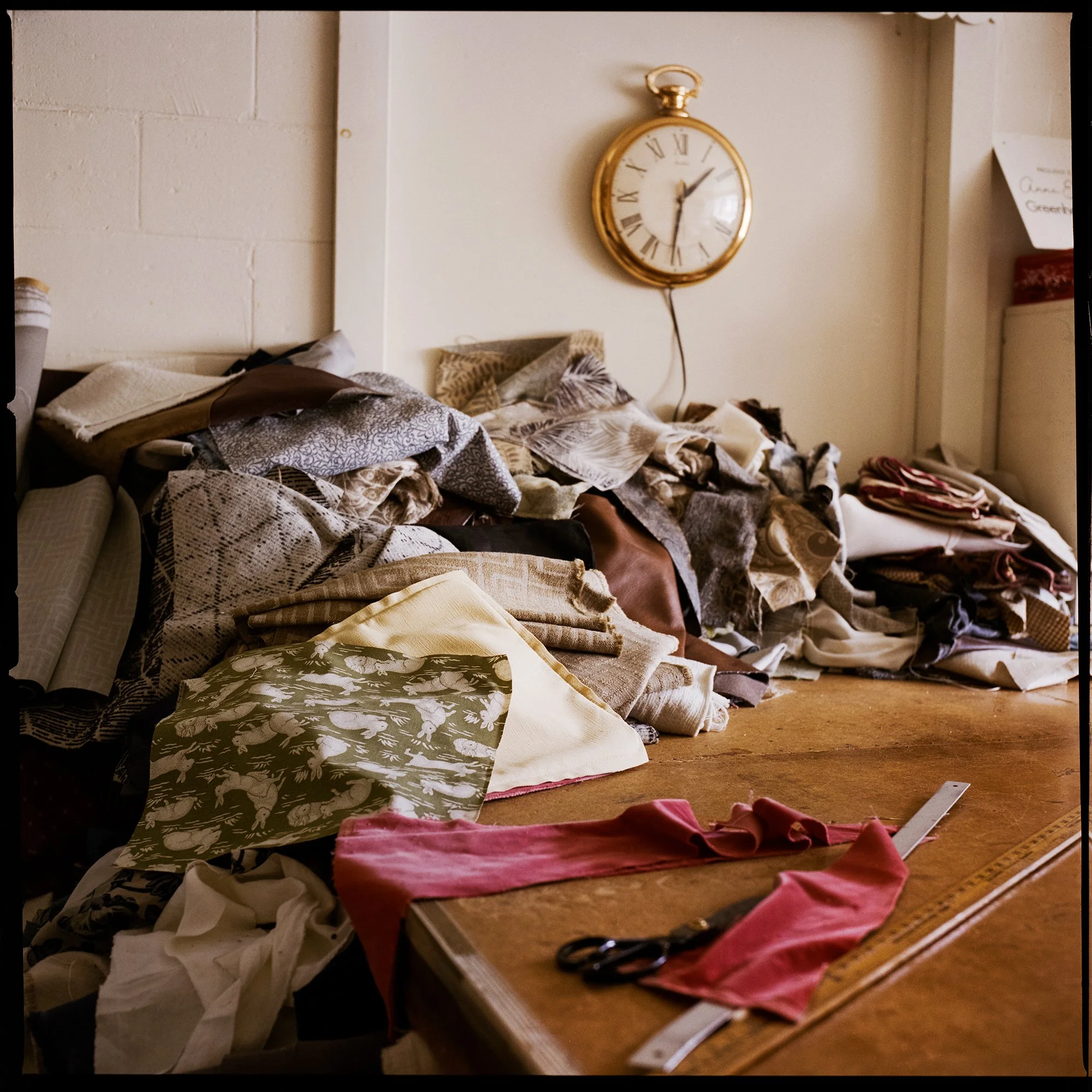
I took my thrifted bench over to her shop and began asking questions. After she told me it wouldn’t take much fabric at all to cover it, I began digging through her vast pile of remnants. I found the pale yellow and dark salmon pink velvets and set them aside, but kept going back and forth on a main fabric. I spotted a tiny little square, maybe 3x3” crumpled on the floor that had bunnies.
What is this! I exclaimed, shaking the tiny square in her direction.
Oh! You know what’s funny, I had forgotten I still had that fabric until just this week, the rest is around here somewhere…
And so, we found the remaining bit of the remnant rabbit fabric, just enough to do to the bench. It was already destined for my daughter’s new room once we finish our renovation, and it wasn’t lost on me that her obsession with bunnies made this find utterly kismet.
Once Peggy worked her magic, I was just hanging up a call when she popped her head into my studio.
I have just enough bunny fabric left for two pillows, should we do it? We did in fact do it.
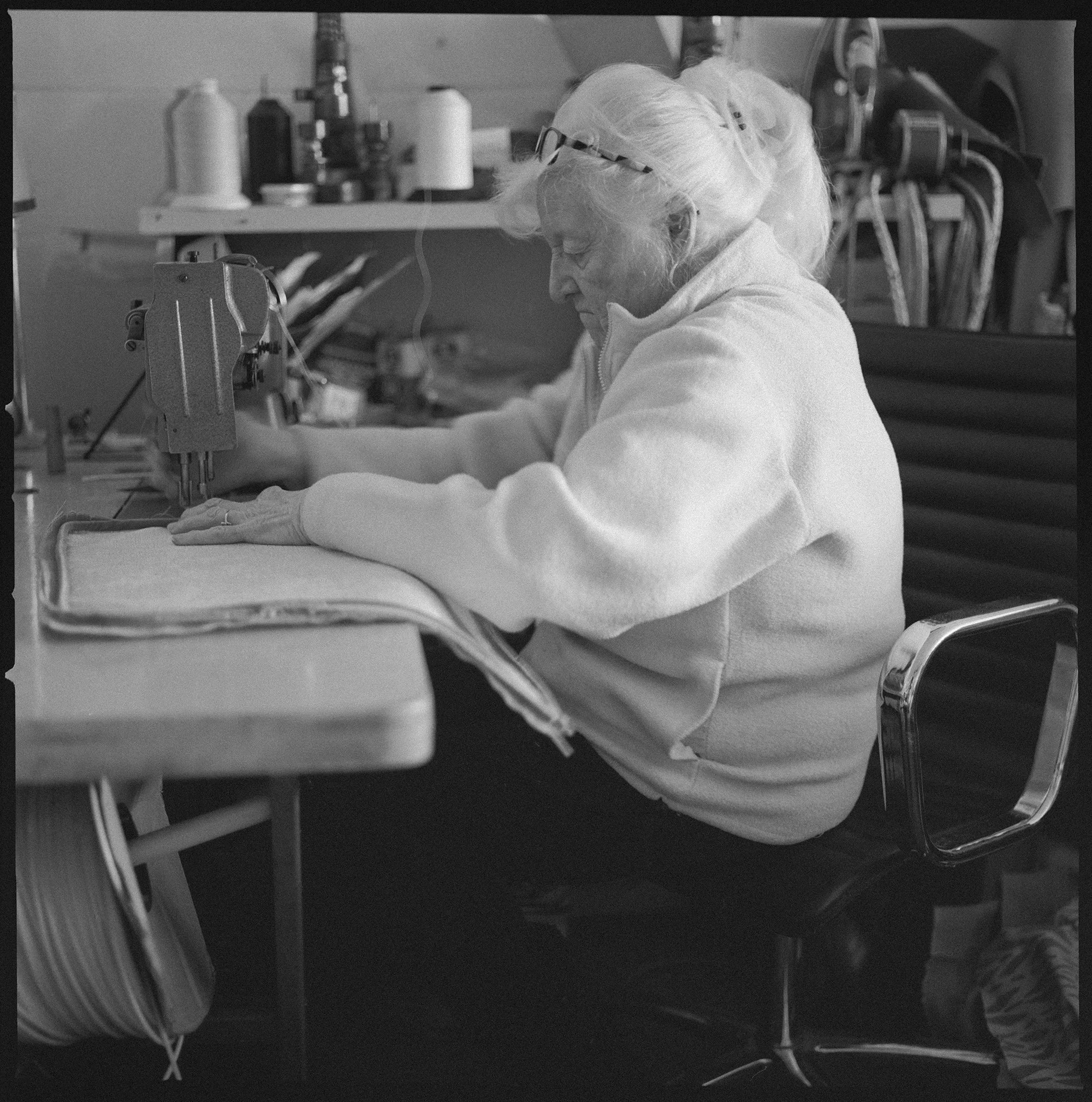
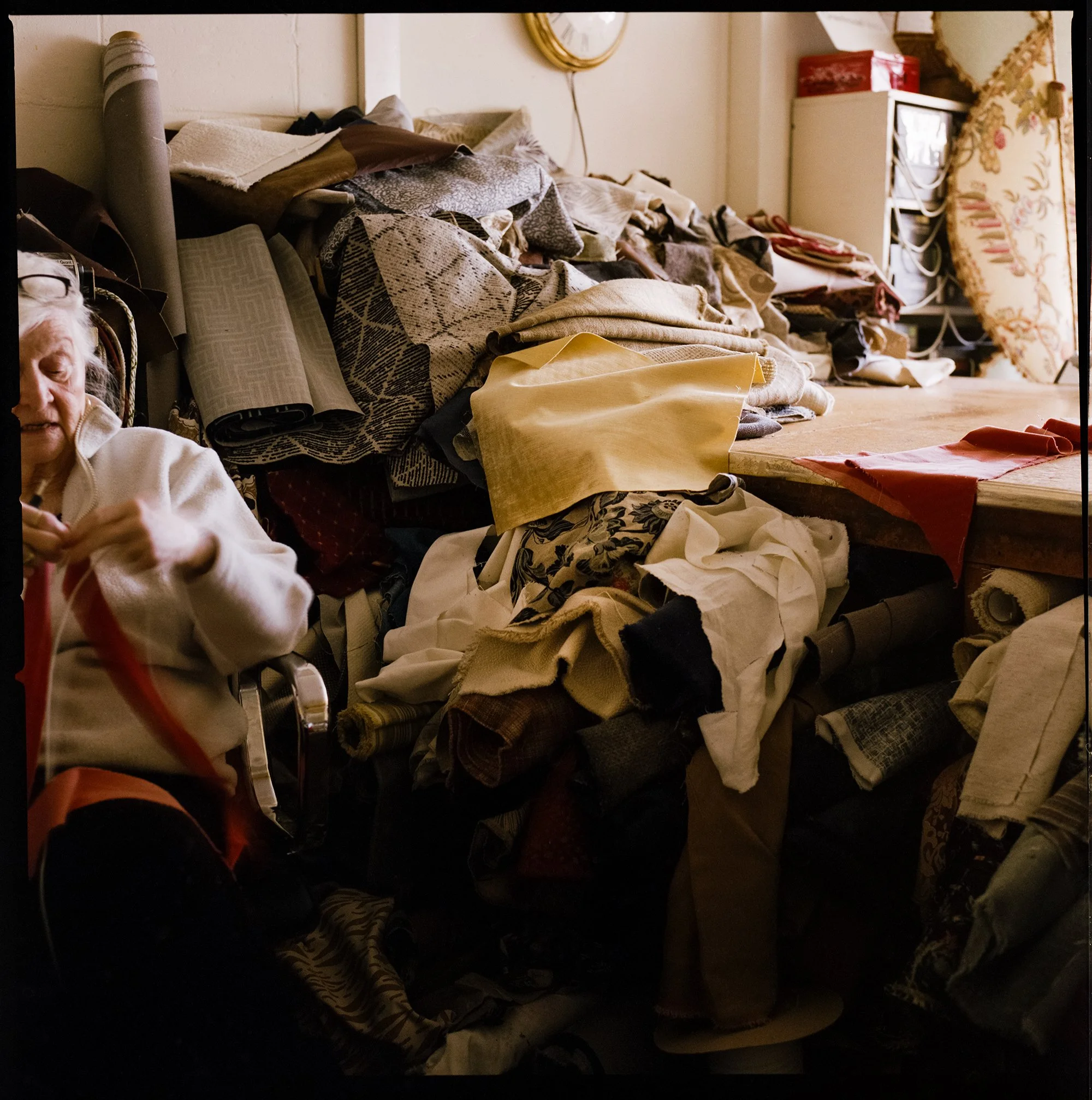
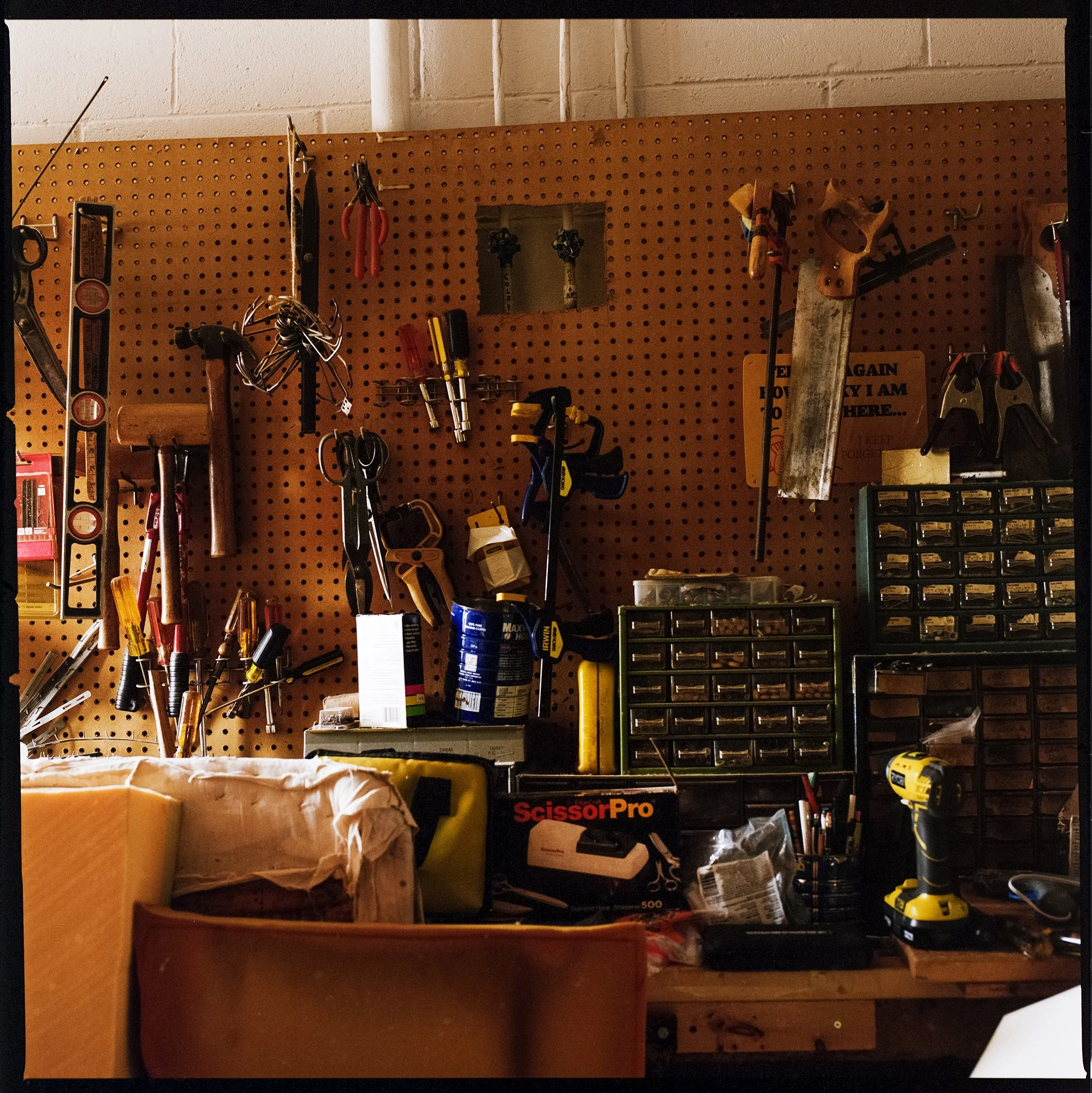
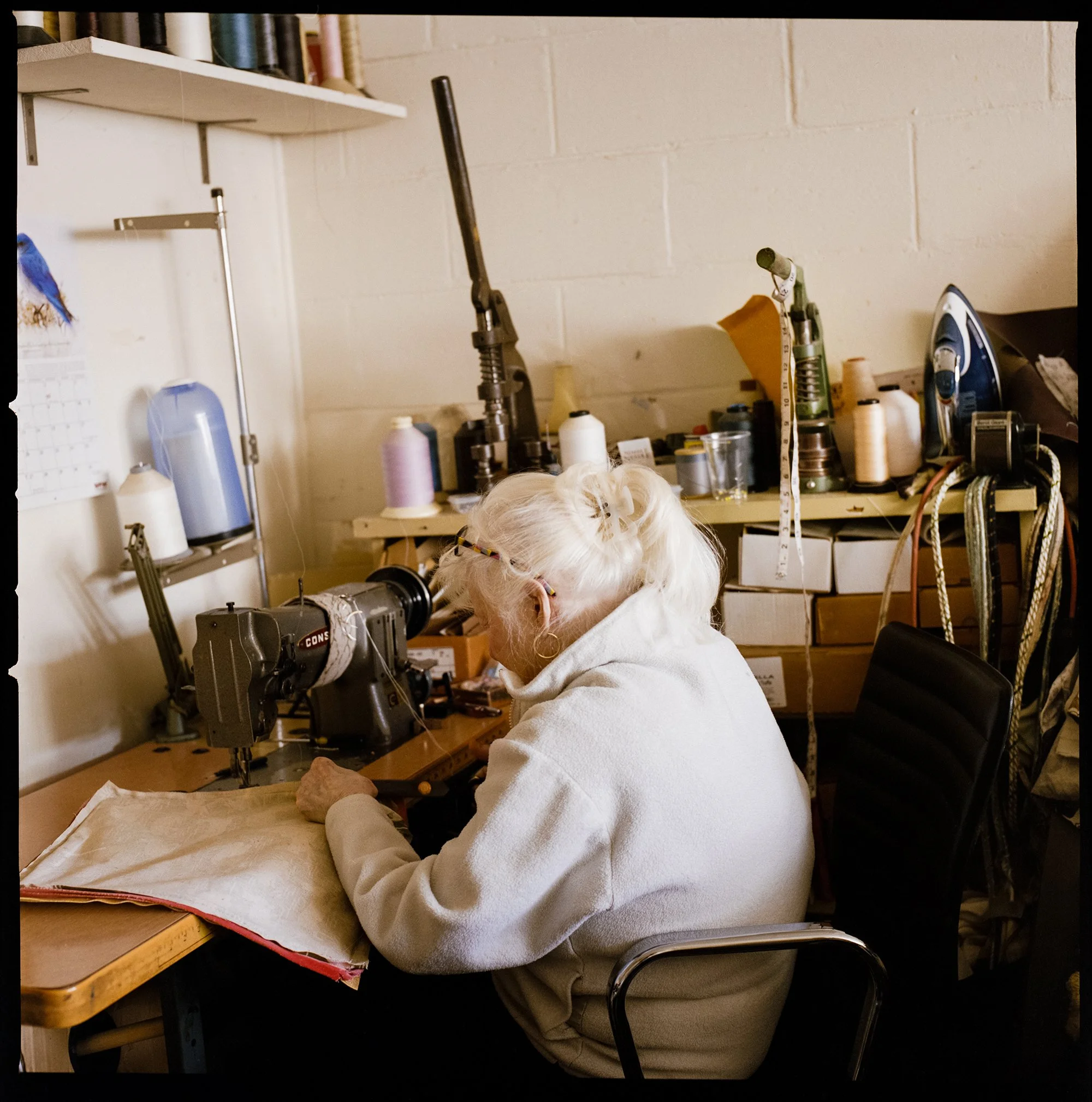
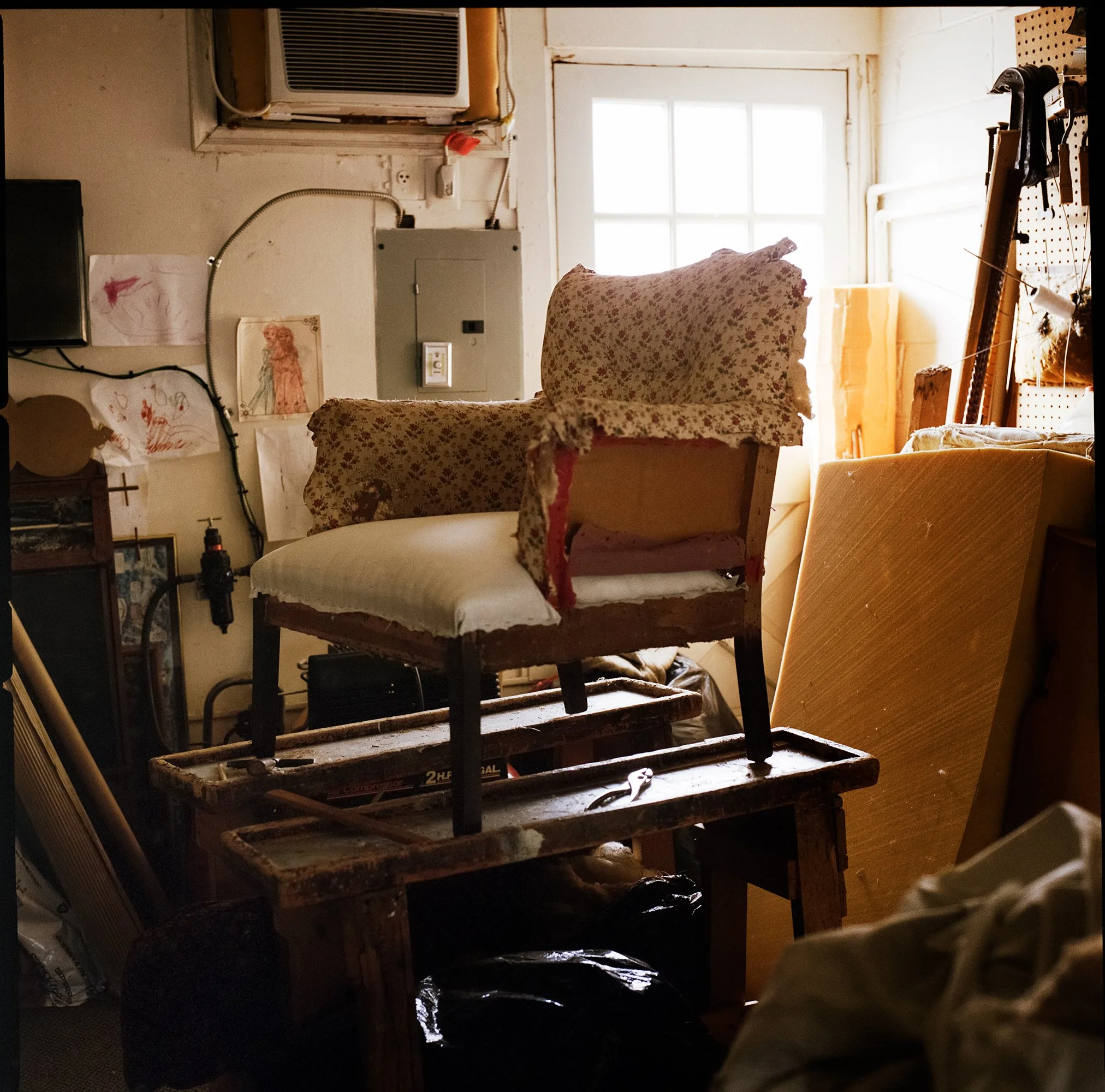
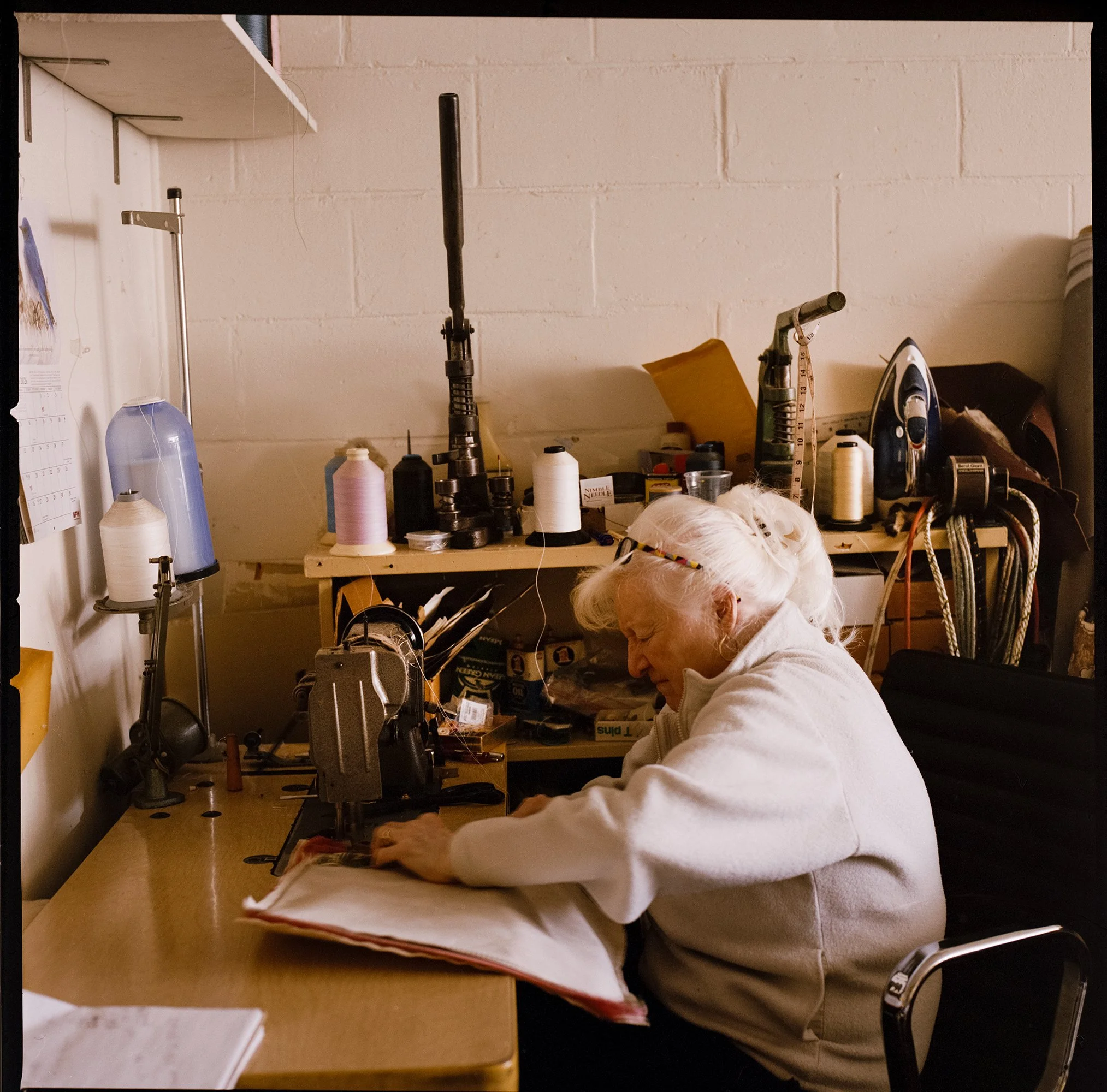
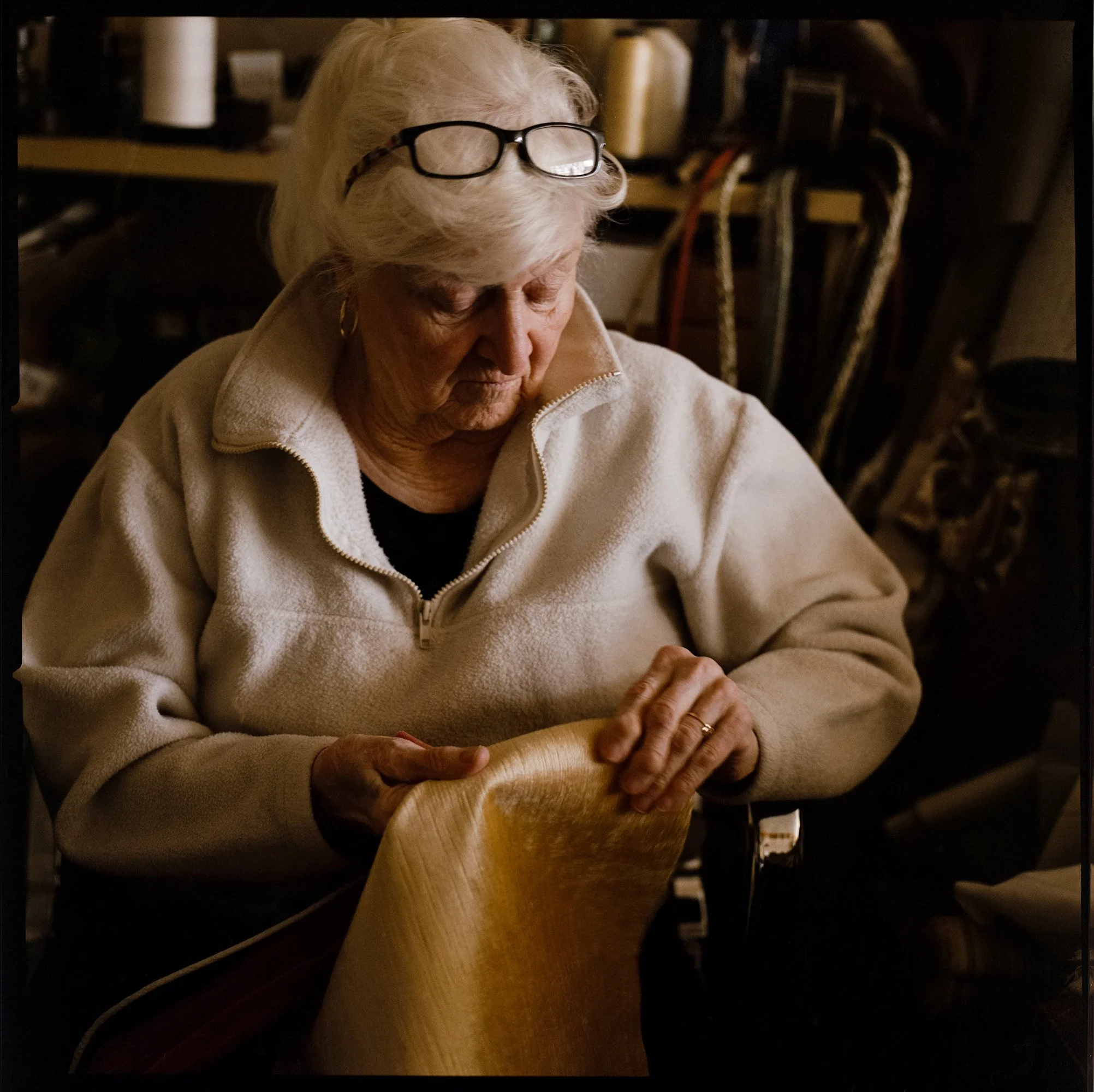
Post-photoshoot and bunny bench completion, Peggy has been gracious enough to answer a few questions. I wanted to get her talking about how she ended up in the dying art of upholstery. A beautifully particular, hands-on type of craft that as she says- can’t really be taught. I condensed our conversation for continuity.
Peggy, how did you get into owning an upholstery shop?
Who the hell knows! It’s something I never thought about, but here I am. The truth is, I could sew. When my sister was taking home economics in school they used to make patterns on black and white paper, and she would bring them home and would take them. You were supposed to sew on the paper, and I just thought that was the best thing ever. Also, my mother was very short so she asked me to make her clothes. I hated dolls but I loved making them clothes. I came home from college one day and my mother was going to throw out her favorite chair, and I asked- can I take it apart and put it back together? My father always used to tell me not to take the clocks apart. I took the chair apart and put it back and then she ended up having it for years. I learned to sew and I liked doing it, and then I did my own furniture, and somebody found out about it. Then I started doing my friends furniture.
Did you teach yourself how to take apart furniture?
Yes, I taught myself. I always loved taking things apart and putting them back together. When my kids were young I was just doing it all myself. Then what happened was, I had a friend who wanted to learn how to be a furniture re-finisher. She asked if i would tag along to the interview. She got the job, but then she had to move right after she started, so the guy called me and asked if I would be interested in taking the job. So I went to work with him, and learned all that I could, as quickly as I could. This guy had an upholsterer who had a drinking problem and never showed up for work, so I offered to finish the upholstery work that was being neglected, but I negotiated more money. Pretty soon, I became his upholsterer and we decided to split the business. He did the refinishing and I did all of the upholstery. That’s how I got started, it was a total fluke.
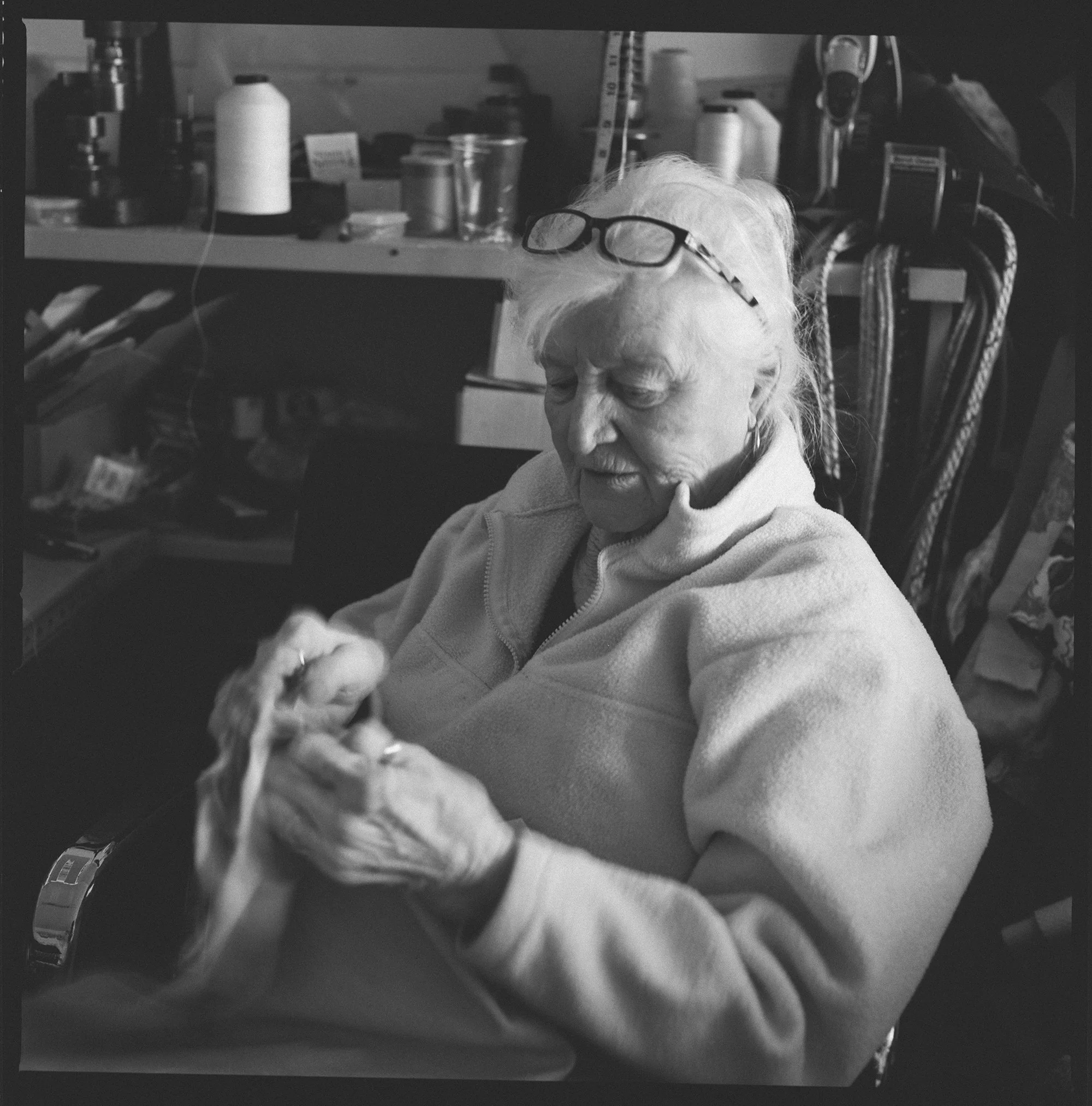
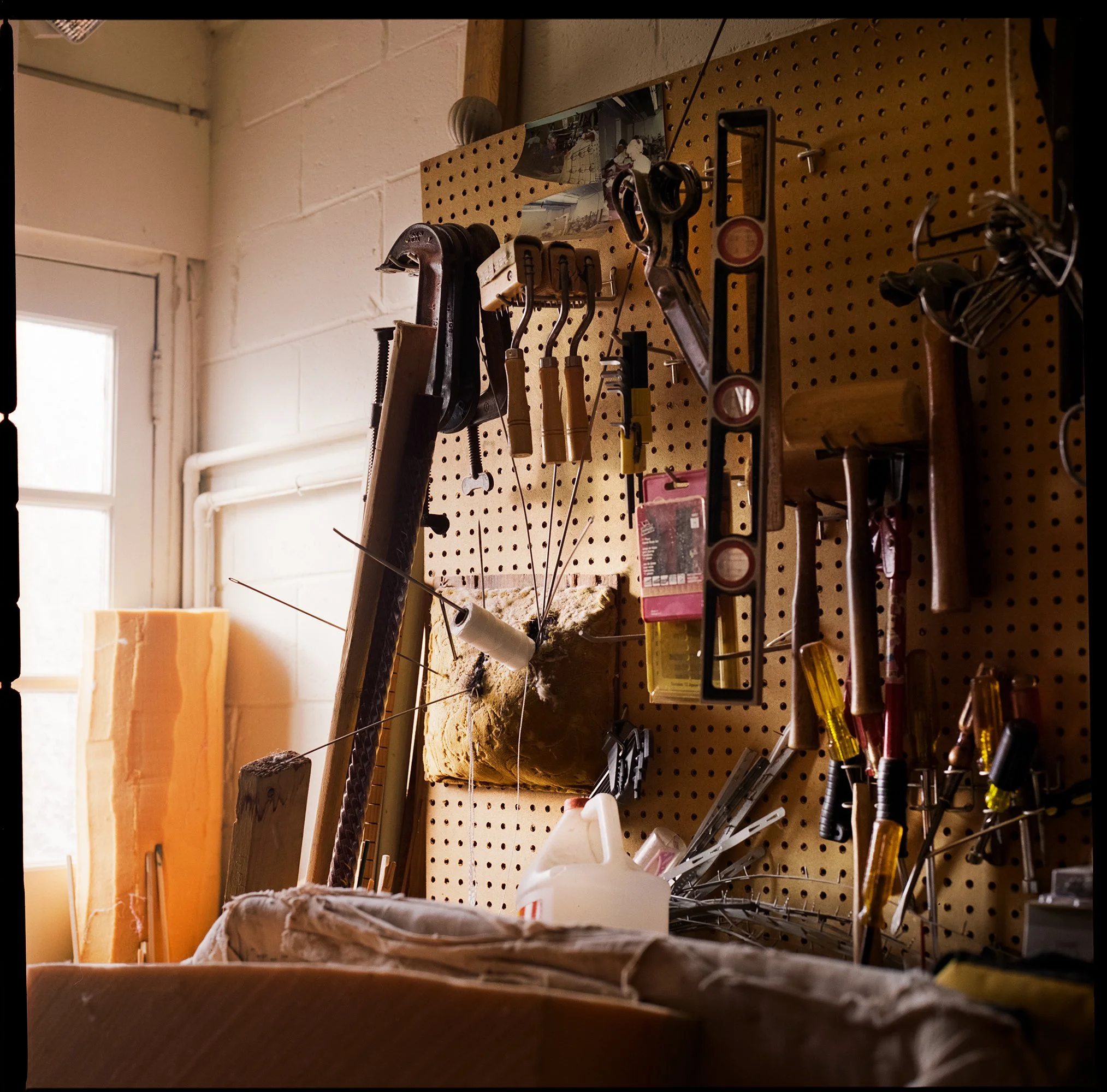
An interior designer friend of mine was in my studio the other day and she mentioned that upholestry seems to be pretty male dominated due to the physicality of taking apart furniture. She was surprised to hear my upholsterer was a woman. Did you realize that when you started down this path?
She’s right. I didn’t care that it was male dominated. The funny thing is customers often say, you’re the one that’s going to do it? They seem surprised that I’m the one taking apart the furniture. It can be kind of demeaning, I think some people look down on this work because they assume it’s lowbrow, working with your hands in this way.
I’ve been not so subtly trying to convince a good friend of mine to learn the art of upholstery so she can eventually become an upholsterer in her next career. You said to me recently it can’t really be taught, but I am curious- how would you recommend someone go about attempting to gain some skills if they were really keen?
It can’t really be taught, the only way to learn is by doing it. It’s a two handed thing. If you can figure anything out, the way something comes apart is the way it goes back together- that’s the trick of upholstery, it’s a puzzle. There are some tricks the longer you do it, that’s for sure. Tufting is math, only certain fabrics work for certain things, you have to figure it out as you go.
Do you feel fulfilled by this work?
Yes. This is my happy place. When you’re done you feel like you did something.
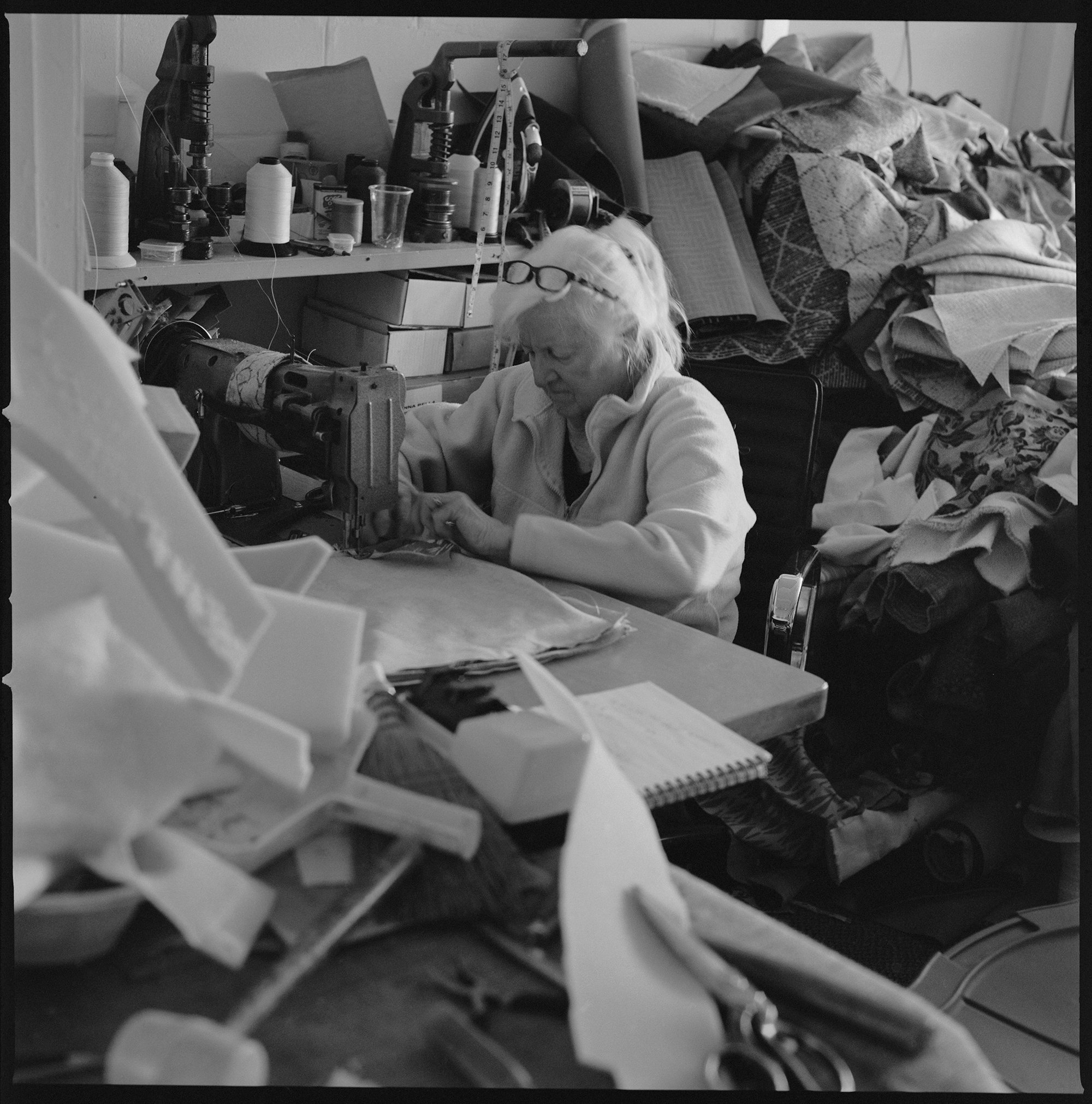
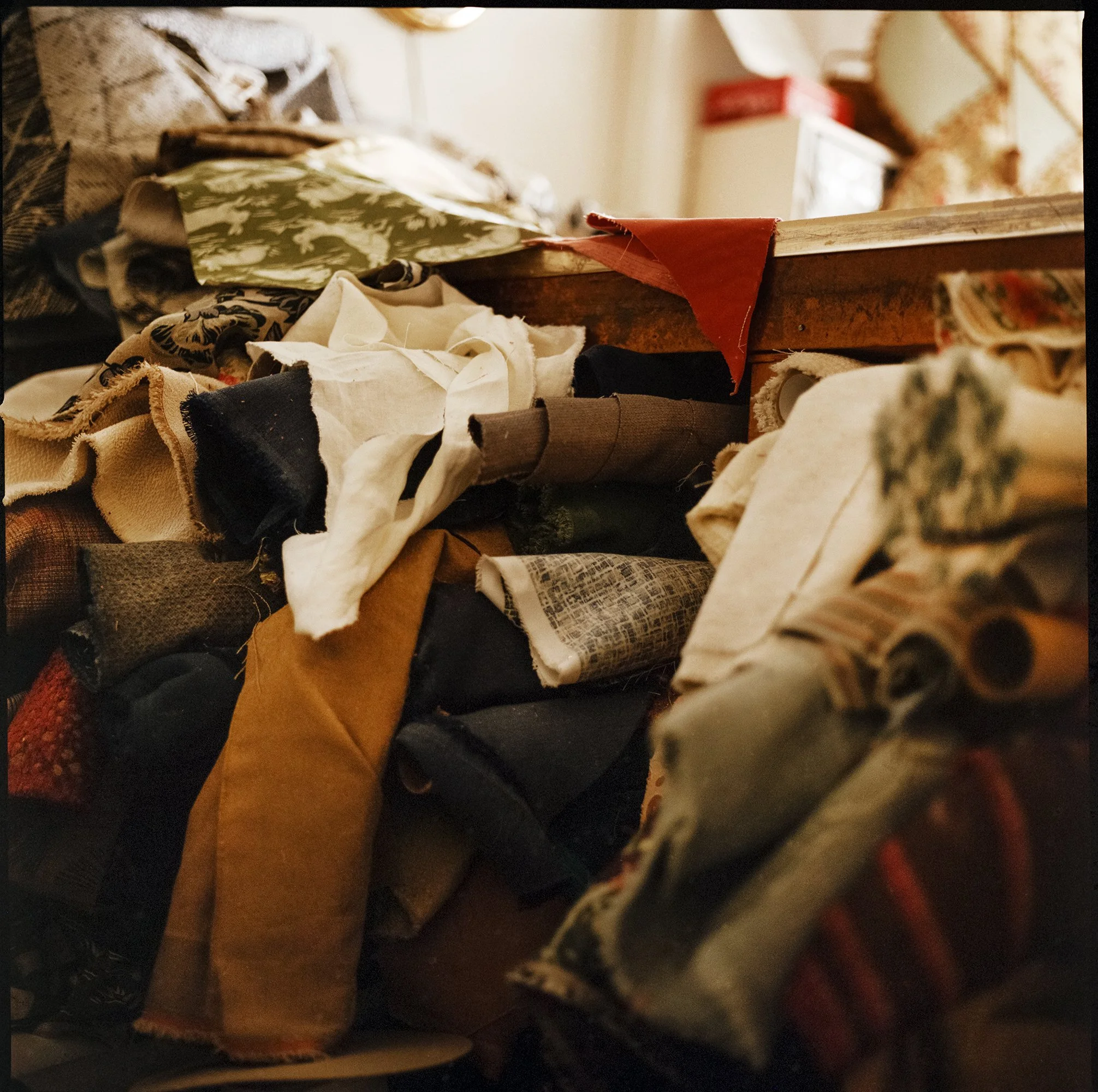
What’s your sign again? Are you a scorpio?
No I’m an Aquarius. Very Aquarian.
Aquarian’s tend to march to the beat of their own drum. Does that feel accurate for you?
Yeah. I’m not too influenced by what anyone else is doing, I don’t really care.
How many years are you going on doing this?
Actually hands on in this business? Maybe 40 years.
You’re set to retire in the coming months. What would you tell yourself when you started?
This is crazy. It’s crazy how you end up where you do. You find a niche, I was supposed to be a schoolteacher, and look at this- I’m not!
What’s your favorite part about doing this, what has kept you doing it so long?
I don’t want to just sew and I don’t want to just take things apart. It keeps things interesting.
Thank you Peggy!